
Drug Detection Through Antibodies: Advantages, Challenges, and Future Directions
By Dr. Tarushyam Mukherjee & Dr. Laila Al-Halabi-Frenzel, Abcalis GmbH
------------------------------------------------------------------------------------------------------------------
In the field of drug detection, antibody-based techniques have become indispensable tools due to their unique strengths. Antibodies provide a highly specific, rapid, sensitive, and cost-efficient alternative to traditional methods, enabling reliable detection of even trace drug amounts in complex samples at point-of-care settings.1 This makes them particularly useful in clinical diagnostics, forensic analysis, and toxicology, where timely and accurate results are critical.
The major advantage of using antibodies lies in their ability to recognize drugs or metabolites with high molecular precision. Moreover, the ability to diversify detection methodologies without compromising the antibody’s recognition of the drug provides a significant advantage for any detection application.2 Even minute concentrations of a target can be captured and identified, which is often challenging for other methods. Immunoassays, lateral flow devices, and similar antibody-based platforms provide rapid, cost-effective, and scalable solutions that can be deployed in both laboratory and field settings. As a result, many drug detection technologies have adapted antibody-based methods as their preferred strategy.
Despite these strengths, developing antibodies against small drug molecules poses significant challenges. Small molecules often lack immunogenicity on their own, and generating antibodies that bind them specifically can be difficult. Cross-reactivity is a common problem, where antibodies mistakenly bind to structurally similar compounds, leading to false positives. Furthermore, designing immune complexes that preserve the essential chemical properties of the drug while still being compatible with antibody generation can be tedious. These hurdles require careful innovation.
To address these challenges, researchers increasingly rely on advanced chemical cross-linking strategies and recombinant antibody technologies. By chemically modifying small molecules in controlled ways, it becomes possible to generate stable conjugates that elicit antibody responses without altering critical features of the drug target. In parallel, recombinant methods, such as phage display, allow scientists to engineer and select antibodies in vitro with exceptional precision, reducing reliance on traditional immunization approaches.3
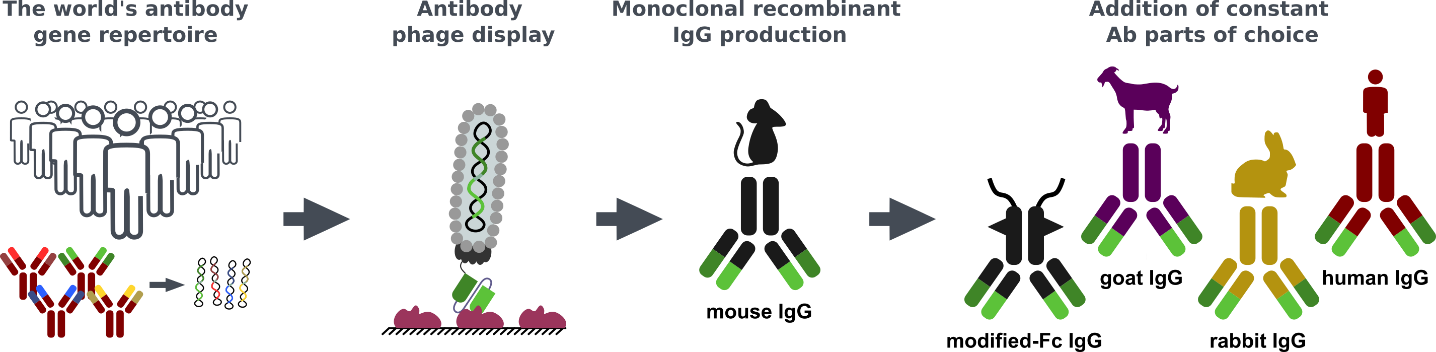 Figure 1 Flow diagram of recombinant, animal-free antibody discovery pipeline at Abcalis GmbH
Another important challenge in drug detection is sensitivity. In many real-life scenarios; such as testing bodily fluids, beverages, or forensic samples from crime scenes; the concentration of a drug may be below the detection threshold. This can result in false negatives, where a drug’s presence goes unrecognized simply because it is too diluted to detect. Antibody-based approaches help overcome this limitation. By immobilizing antibodies onto surfaces, drugs can be specifically captured and concentrated in one region. This not only increases their effective concentration but also enhances the likelihood of downstream detection by compatible analytical methods.
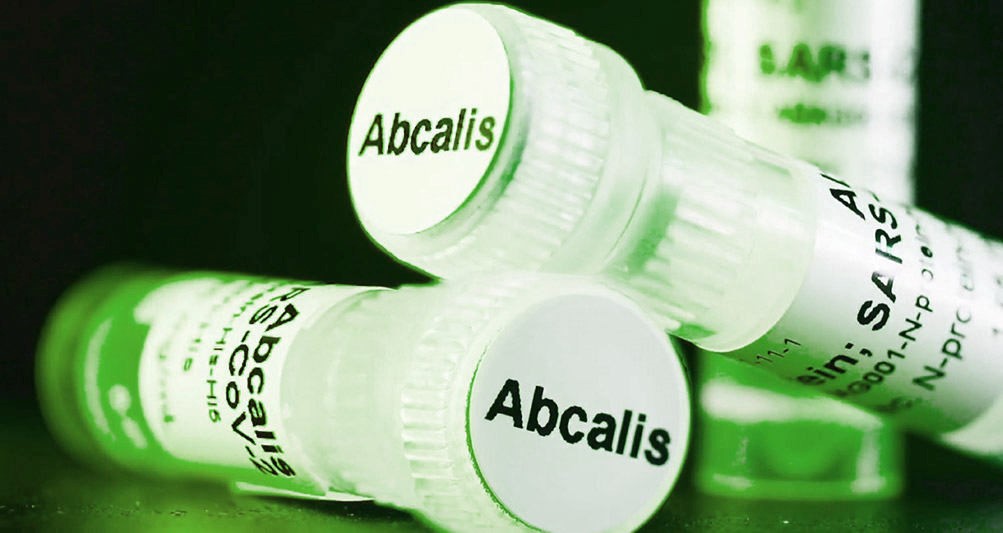
Figure 2 Snapshots of some of the cutting-edge animal free antibody samples developed by Abcalis GmbH
Looking to the future, ARMADILLO in collaboration with Abcalis GmbH is pushing the boundaries of drug detection through environmentally friendly, recombinant animal free antibody technology.4 Their focus is on developing recombinant antibodies that are animal-free, reproducible, and robust.5 Abcalis, a leader in this field, is committed to do so by employing methodologies such as phage display technology, a powerful platform for producing cutting-edge recombinant antibodies tailored for small molecule detection and beyond. These innovations promise greater reproducibility, ethical sustainability, and reliability compared to traditional antibody generation and production methods.
In summary, antibodies bring powerful advantages to drug detection, particularly in terms of speed, specificity, and sensitivity. While challenges remain in targeting small molecules and detecting ultra-low concentrations, modern chemical and recombinant approaches are steadily overcoming these barriers. With endeavor that ARMADILLO took over alongside Abcalis at the forefront, the future of antibody-based drug detection looks both promising and transformative.
References
1. Mpofu, K., Chauke, S., Thwala, L. & Mthunzi-Kufa, P. Aptamers and antibodies in optical biosensing. Discov. Chem. 2, 23 (2025).
2. Sharma, S., Byrne, H. & O’Kennedy, R. J. Antibodies and antibody-derived analytical biosensors. Essays Biochem 60, 9–18 (2016).
3. Gray, A. et al. Animal-free alternatives and the antibody iceberg. Nat Biotechnol 38, 1234–1239 (2020).
4. Roth, K. D. R. et al. Developing Recombinant Antibodies by Phage Display Against Infectious Diseases and Toxins for Diagnostics and Therapy. Front Cell Infect Microbiol 11, 697876 (2021).
5. Bradbury, A. R. M. & Plückthun, A. Getting to reproducible antibodies: the rationale for sequenced recombinant characterized reagents. Protein Eng Des Sel 28, 303–305 (2015).